
18 November 2026
Sustainability is becoming a practical consideration in freight procurement. Shippers increasingly need information about transport emissions, fuel choices and environmental reporting. Freight forwarders must therefore understand not only how cargo moves, but also how its environmental impact is measured.
A carbon figure is useful only when its calculation method and boundaries are clear. The Global Logistics Emissions Council (GLEC) Framework provides a recognised methodology for measuring and reporting logistics emissions across transport modes.
For air cargo, IATA CO2 Connect for Cargo uses airline-specific operational data to calculate shipment emissions. Forwarders should clarify the methodology behind any figures they share with customers.

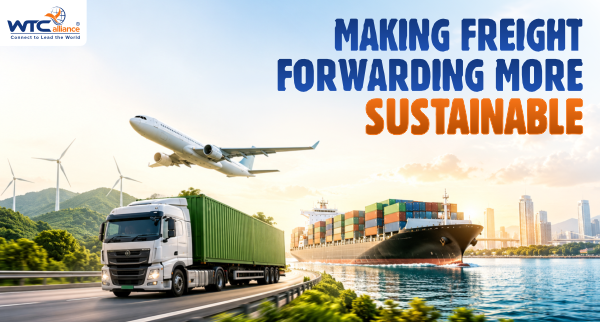
Air, sea, road and rail transport have different emissions profiles. Air freight may suit urgent cargo, while ocean freight can be appropriate for larger consignments with flexible delivery schedules. The comparison must account for cargo characteristics, route, load, transit requirements and the full transport chain.
The International Maritime Organization's greenhouse gas strategy outlines the shipping sector's direction towards reducing emissions. Mode selection should balance service requirements with credible environmental data.
On 1 June 2026, the EU's CountEmissionsEU framework entered into force, establishing a harmonised methodology for calculating transport emissions. Its application is being phased in, with full application expected by the end of 2030.
Freight forwarders serving European customers should monitor implementation and understand which requirements apply to their operations. The European Commission's transport emissions guidance provides further context.

Start by collecting consistent shipment data, identifying avoidable empty movements, improving load utilisation and discussing lower-emission options with carriers. Report actual results transparently instead of making unsupported environmental claims.
WTC Alliance connects freight forwarders across 120+ countries. Through its global reach programme, members can develop overseas connections and explore opportunities to coordinate international services. Its member services include freight inquiries and online quotation exchanges that can support communication between network partners.
Members can also explore WTC Alliance membership benefits to understand its international business opportunities. Sustainability initiatives, however, depend on the specific carriers, routes and services selected.
Shippers need transparent emissions information, realistic alternatives and measurable improvements. Freight forwarders that build reliable data practices and work closely with transport partners will be better prepared to respond to these expectations.
Explore WTC Alliance at https://www.wtcalliance.com.
Copyright © 2026 All Rights Reserved by WORLD TOP CARGO ALLIANCE LTD
Design and Developed by infinGlobal